Iran’s Reformists and the Search for a Strongman
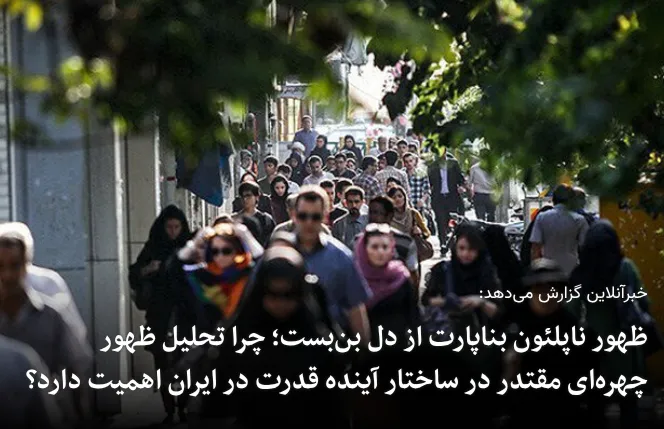
In a rare move, a moderate or reformist-leaning outlet in Iran discusses the possibility of a “Bonaparte-like figure” emerging from within the Islamic Republic as a way out of the current political and economic deadlock. This discussion is particularly notable as it appears amid growing and increasingly angry protests that target the regime as a whole, while voices from within the reformist camp have begun openly criticizing Ali Khamenei and even floating the idea of replacing him, possibly with figures such as Hassan Rouhani. The article argues that official institutions have become rigid and ineffective, while society is under mounting pressure and seeking decisive action. Rather than advocating systemic change, it frames this hypothetical strong figure as an emergency mechanism to preserve the existing political order. Such a leader would have to operate with the consent, or at least the tolerance, of the highest levels of power. The scenario is presented as neither democratic nor coup-like; the proposed figure need not be popular, only capable of implementing difficult and politically costly economic reforms.
The article rests on familiar reformist assumptions that Iranian society is tired and dissatisfied, but not prepared for revolutionary change. It distinguishes between widespread discontent and readiness for regime transformation, arguing that the absence of leadership, organization, and a credible post-transition vision prevents protests from producing a viable alternative political project. In doing so, it overlooks pro-Pahlavi chants and other explicitly regime-rejecting expressions that have surfaced during recent unrest. It also reiterates the claim that the opposition is fragmented and lacks the capacity to govern a complex state such as Iran, not only politically but also administratively and economically, while portraying the Islamic Republic as fundamentally stable in security terms despite evident paralysis at the level of strategic decision-making.
Finally, the article frames Iran’s predicament primarily as an economic crisis rather than a political or legitimacy crisis. Inflation, stagnation, and institutional inertia are treated as the core drivers of instability, reinforcing an argument for decisive economic management over political restructuring. The result is a system-preserving, authoritarian solution presented as pragmatic crisis management rather than democratic reform or structural transformation.
Notably, the article avoids addressing what many Iranians view as the central sources of the country’s economic crisis: systemic corruption, ideologically driven foreign policy adventurism, and a destabilizing regional posture that has produced years of sanctions and international isolation. Instead, it reduces the problem to the need for “hard economic decisions,” a framing that strips the crisis of its political and ideological roots. Multiple Iranian administrations have attempted painful economic reforms, including subsidy cuts and austerity measures, yet these efforts have consistently failed to produce sustainable results. The reason is not a lack of economic resolve, but the fact that Iran’s dysfunction is not primarily economic in nature. It is embedded in the structure, incentives, and ideological foundations of the Islamic Republic itself. Without confronting those foundations, calls for decisive economic management merely postpone, rather than resolve, the underlying crisis.