Articles
The Illusions of Support and Normalcy
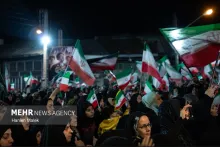
As the Islamic Republic continues to broadcast images of nightly gatherings by its supporters in the streets, there is little reason to believe that these displays of support are entirely organic. Numerous reports point to the use of financial incentives, institutional pressure, and various forms of coercion to encourage participation in rallies and public demonstrations of loyalty. The very need to manufacture visible support reflects the regime’s own awareness that it no longer commands overwhelming public legitimacy.
READ MORE »How Iran’s Power Base Is Turning on Itself
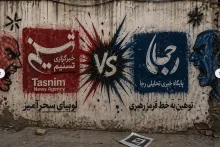
The Islamic Republic appears to be entering a phase where tensions within its own support base are becoming as serious as its conflict with its opponents. The system has lost the figure who once functioned as fasl al-khitab, the final authority in moments of dispute, and that absence is beginning to show.
READ MORE »Mood in Tehran: The Strategic Importance of Internal Erosion
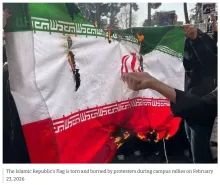
Is the uncertainty surrounding current negotiations between Tehran and Washington an unintended consequence for both sides? Is it part of a calculated U.S. pressure strategy? Or does it primarily reflect the Islamic Republic’s own structural weaknesses and policy failures, merely amplified by diplomacy?
READ MORE »Mood in Tehran: Defiance After the Massacre
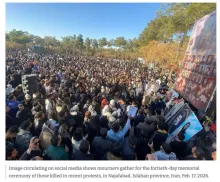
Forty days after the massacre of protesters, developments inside Iran suggest not a subdued society, but a more unified and defiant one. Images emerging from across the country indicate that the killings failed to suppress public dissent. They strengthened solidarity among neighbors, local communities, and the Iranian diaspora.
The social contract that once existed between the population and the state, even in its most basic form, appears fundamentally broken. There is little evidence that the regime, the current administration, or its intermediaries can meaningfully restore it.
Will There Be Foreign Intervention?
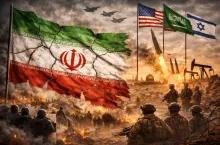
Will There Be Foreign Intervention?
This is a question heard repeatedly these days, both inside and outside Iran. While difficult to answer definitively, it can be approached through observable evidence, including military movements and past and present statements by officials. This leads to a broader question: has the lifespan of the Islamic Republic reached its end for the West and for regional states? Has removing the regime become more useful, or more feasible, than before?
Iran’s Reformists and the Search for a Strongman

In a rare move, a moderate or reformist-leaning outlet in Iran discusses the possibility of a “Bonaparte-like figure” emerging from within the Islamic Republic as a way out of the current political and economic deadlock. This discussion is particularly notable as it appears amid growing and increasingly angry protests that target the regime as a whole, while voices from within the reformist camp have begun openly criticizing Ali Khamenei and even floating the idea of replacing him, possibly with figures such as Hassan Rouhani.
READ MORE »Mood in Tehran: Lipstick on a Pig Won’t Save the Regime

Protests have now entered their tenth consecutive day across Iran. Growing crowds in numerous cities and towns are openly demanding the end of the regime, with many explicitly calling for the return of Reza Pahlavi. This marks a significant departure from previous protest waves, regardless of their size: for the first time, large segments of the population are sending a clear and unmistakable message that they are done with the entire regime.
READ MORE »Mood in Tehran: The End of Belief in Reform

In recent weeks, public anger inside Iran has crossed a critical threshold. What once focused on state institutions has begun to target cultural figures, reformist intermediaries, and even celebrated political prisoners—an unmistakable sign that the regime’s system of privilege, or what many Iranians perceive as regime-affiliated privilege, is no longer merely resented but openly rejected.
Can Concessions Prevent Iran’s Next Protest Wave?
The Islamic Republic is walking a fragile line. In recent months, it has eased some social restrictions—loosening enforcement of mandatory hijab and permitting high-profile concerts—in an apparent effort to project stability and reduce the risk of renewed protests. The strategy seems intended to send two simultaneous messages: to domestic audiences, that society remains calm and aligned with the state and that limited freedoms are possible without the need for another uprising; and to international observers, that the regime is not on the verge of collapse.
READ MORE »The Rising Debate over Iran’s Nuclear Choices: Weaponize or Walk Away?
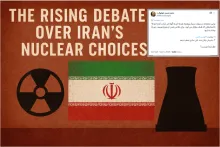
The ODNI’s 2025 threat assessment report, published before the U.S.-Israeli strikes against Iranian nuclear sites, noted that over the past year there has been an erosion of the decades-long taboo on publicly discussing nuclear weapons—a shift that has emboldened advocates of weaponization within Iran’s decision-making apparatus. Following the strikes and under the mounting pressure of the impending snapback of U.N.
READ MORE »Iran Focus

For years, Tehran operated with a sense of strategic confidence, relying on its network of proxies in Iraq, Lebanon, and Yemen to assert influence and respond to Western pressure. But that model has eroded.
Israel's systematic dismantling of Hezbollah's leadership and Hamas's weakened state have left Iran's most valuable assets severely compromised. The regime now faces the stark reality that its "axis of resistance" can no longer guarantee the deterrence it once provided against direct confrontation.