How Iran’s Power Base Is Turning on Itself
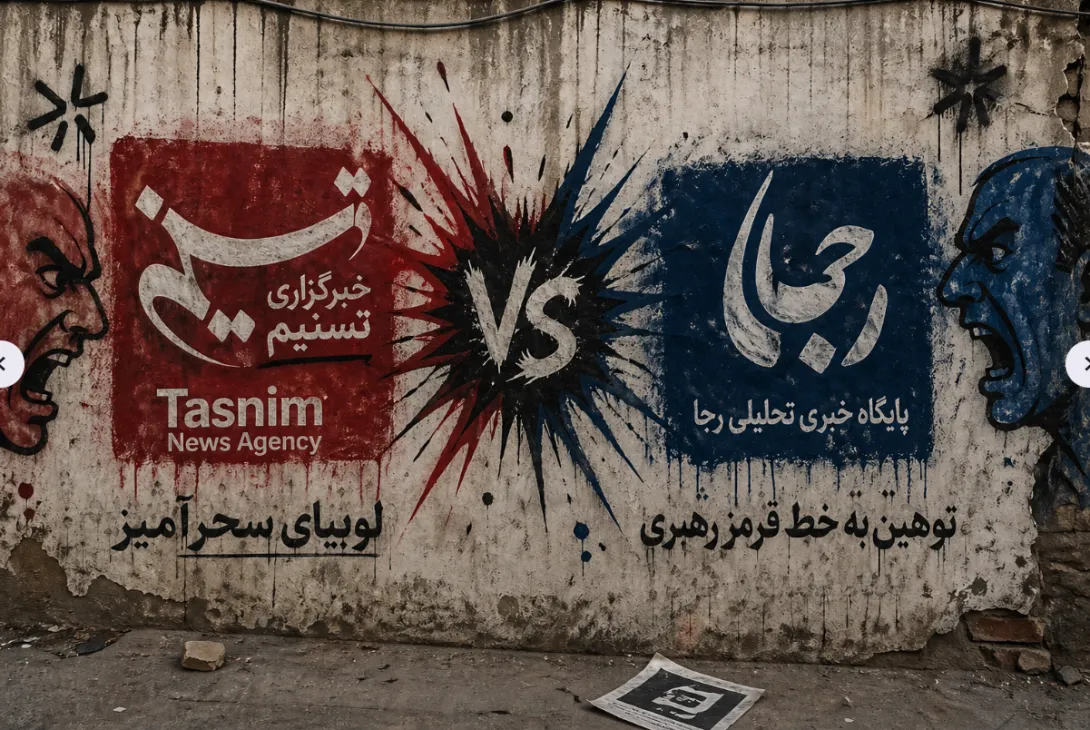
The Islamic Republic appears to be entering a phase where tensions within its own support base are becoming as serious as its conflict with its opponents. The system has lost the figure who once functioned as fasl al-khitab, the final authority in moments of dispute, and that absence is beginning to show.
The regime’s supporters have never been fully unified. They are composed of overlapping networks tied to institutions and personalities, unified by ideology but divided over how far to push it. What kept these differences contained was Ali Khamenei’s role as an arbiter. His presence imposed alignment, even when disagreements ran deep.
With Mojtaba Khamenei largely absent from public view and questions surrounding his authority, decision-making at the top is increasingly exposed to resistance from within the regime’s own base. The recent shift toward ceasefire and negotiations with the United States has brought these divisions into the open.
Economic pressure is clearly taking a toll. The country has not experienced anything resembling normalcy since the January protests, and continued confrontation with the public, including internet restrictions, has only added to the strain.
Within the regime’s base, one camp, including elements of the IRGC, sees negotiations as a necessary step to relieve pressure. Another, shaped by years of its own rhetoric and convinced the Nezam has already prevailed, insists on maximalist demands. Figures close to former nuclear negotiator Saeed Jalili have even warned that without visible confirmation from the new supreme leader, negotiations could be interpreted as the work of actors pursuing a “coup.”
The prolonged impasse in negotiations and external messaging, including statements by Donald Trump emphasizing the regime’s indecision, add to the strain on an already fragile internal environment. Whether by design or by effect, such pressure appears to deepen existing fractures within the regime’s support base. The longer Mojtaba Khamenei remains absent from public view, the deeper these cracks are likely to become.
What we are witnessing is not immediate collapse, but the erosion of the internal mechanisms that once sustained cohesion.